LTO Plate Replacement Check: Complete Guide to Getting Your New License Plates in the Philippines
Now replacement of a vehicle’s plate number is not a complicated and time taking process. The Land Transportation Office (LTO) processes over 15 million vehicle transactions yearly, and a significant portion involves plate replacements. Whether your plate was lost, stolen, or even damaged, when you know the exact steps you can make it easy and time and money saving for you.
In this guide you will go through everything you need to know about LTO plate replacement. You’ll learn how to apply for plate replacement, its cost and documents requirement. You will also know how to check your replacement status online and also get useful tips to avoid common mistakes that can delay your replacement process.
What is LTO Plate Replacement?
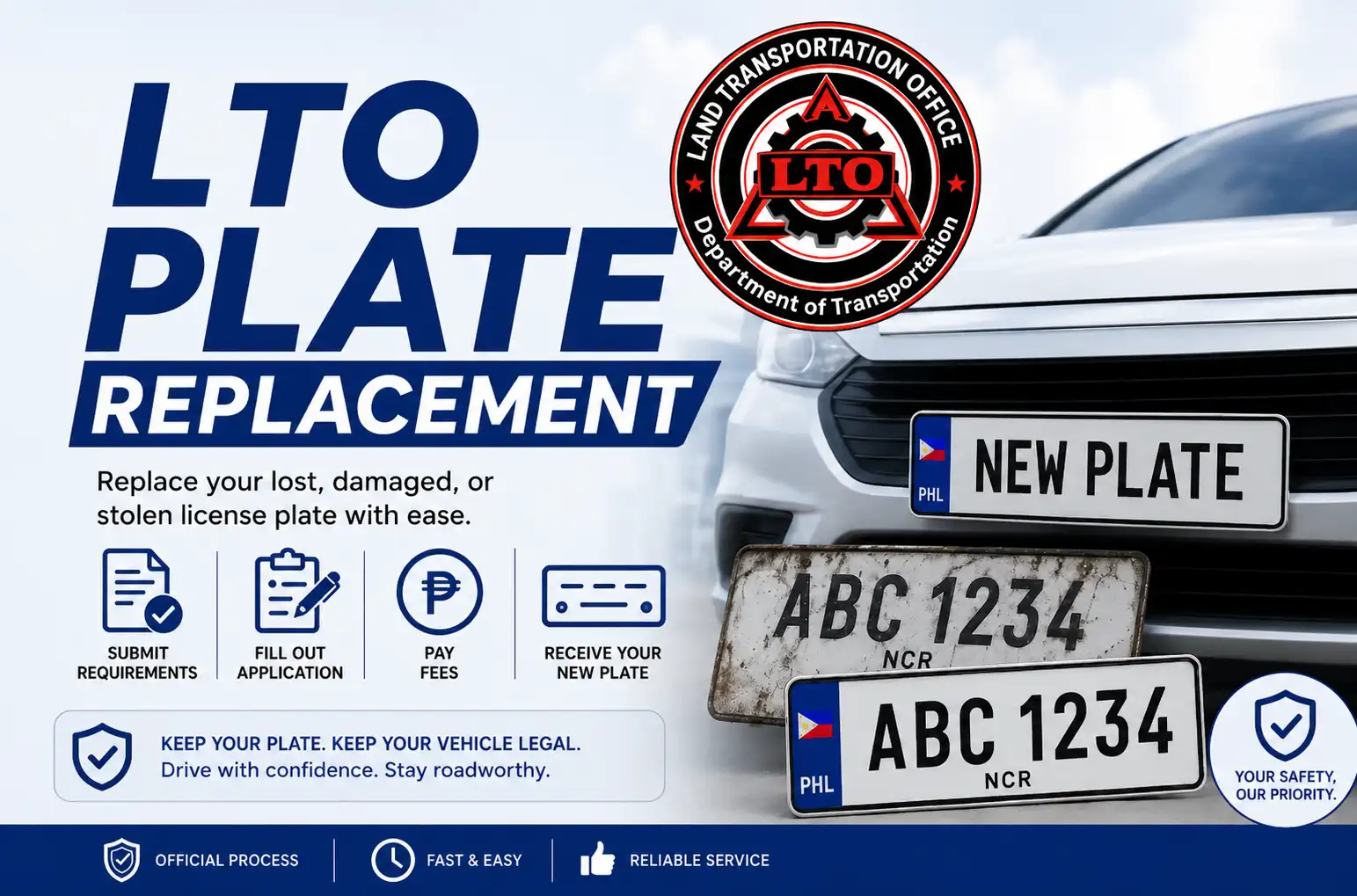
LTO plate replacement is the official process to get a new license plate when your original plate is lost, stolen, damaged, or you need updating due to ownership transfer. The process takes 3 to 8 weeks and costs between ₱450 to ₱600 depending on vehicle type.
Why is it Important to Replace Your Number Plate?
There are multiple reasons when a person needs plate replacement and to save yourself for future problems. Here we are sharing the main scenarios when you require plate replacement immediately.
- If you have lost your plate during an accident or theft, you should immediately take action and inform the Land Transportation Office (LTO). Because you cannot legally drive without plates, and traffic enforcers will impound your vehicle on sight. That’s why your vehicle needs a plate replacement in these situations.
- If you have damaged plates with unreadable numbers or broken materials you must need replacement. The LTO considers a plate damaged when you cannot read the alphanumeric characters from 15 meters away. Faded paint or bent metal that obscures your plate number falls under this category.
- Old plate designs also qualify for replacement. The LTO periodically updates plate formats to improve security features. Vehicles with outdated plate designs can voluntarily upgrade to the new format.
- Ownership transfer is another common reason because when you buy a used vehicle, the previous owner’s plates stay with them. The new owner must apply for new plates under their name through the transfer of ownership process.
Requirements to Claim Replacement Plate from LTO
Before claiming your replacement plate, you have to prepare all the required documents. The requirements vary depending on whether you are the registered owner, the new owner of the vehicle, or an authorized representative. If you bring the complete documents, you can easily avoid delays and can complete your claiming process quickly.
Required Documents Checklist
| Document Type | Purpose | Where to Get |
|---|---|---|
| Official Receipt (OR) | Proof of registration payment | From your vehicle registration |
| Certificate of Registration (CR) | Vehicle ownership proof | From your vehicle registration |
| Valid ID | Identity verification | Any government-issued ID |
| Police Report | Required for stolen plates only | Local police station |
| Affidavit of Loss | Sworn statement of circumstances | Any notary public |
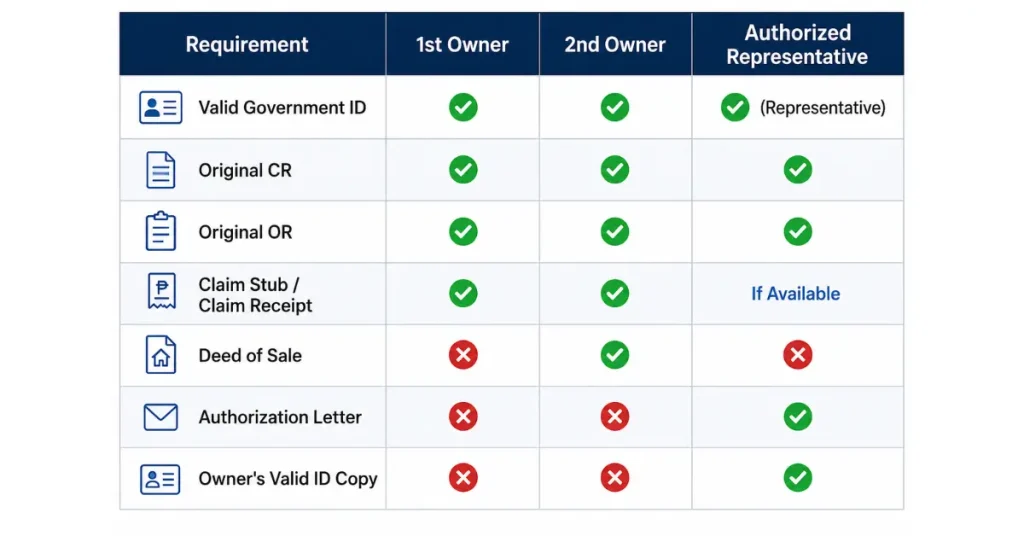
For 1st Owner
If you are the registered owner of the vehicle, you must present documents that prove your identity and ownership. The LTO uses these documents to verify that the replacement plate is being released to the correct person.
Common requirements include:
- Valid government-issued ID
- Original Certificate of Registration (CR)
- Official Receipt (OR) or proof of vehicle registration
- Claim stub or LTO-issued claim receipt (if available)
Always bring both the original documents and photocopies if required by the LTO office.
For 2nd Owner
If the vehicle has already been sold and you are the second owner, additional documents may be required to prove the transfer of ownership. This helps the LTO confirm that you have the legal right to claim the replacement plate.
Common requirements include:
- Valid government-issued ID
- Original CR and OR
- Deed of Sale or proof of ownership transfer
- Other supporting documents requested by the LTO
Make sure all ownership records are properly updated to avoid issues during the claiming process.
For Authorized Representative
If the vehicle owner cannot personally claim the replacement plate, an authorized representative may do it on their behalf. The representative must bring documents that prove they have permission to act for the owner.
Common requirements include:
- Authorization letter signed by the vehicle owner
- Valid ID of the vehicle owner
- Valid ID of the authorized representative
- Original CR and OR
- Other documents required by the LTO office
Before visiting the LTO branch, you need to confirm the latest requirements because document requirements may vary depending on the office and the type of plate replacement request.
How to Apply/Claim LTO Replacement Plate
Now you don’t have complicated steps to apply for the replacement plate LTO. The application process has clear steps:
First, prepare your documents before going to the LTO office. Bring your Official Receipt (OR) and Certificate of Registration (CR) as proof of ownership. These documents show you’re the registered owner and your account is current.
For stolen plates, file a police report within 24 hours of discovery. The report number goes on your affidavit of loss. Without this police report, the LTO won’t process stolen plate replacements because it prevents fraud.
Next, secure an affidavit of loss from any notary public. This sworn statement declares how you lost your plates and confirms you’re not using them illegally. The affidavit costs ₱100 to ₱200 depending on the notary’s location.
Step-by-Step Application Process
- Go to any LTO district office or extension office during business hours (Monday to Friday, 8 AM to 5 PM).
- Get a queue number from the information desk and specify “plate replacement”.
- Submit your documents at the evaluation window for verification.
- Pay the replacement fee at the cashier (keep your receipt).
- Proceed to the releasing section to complete your application.
- Receive your claim stub with your Motor Vehicle (MV) file number.
The claim stub is critical. This small piece of paper contains your tracking number for checking your plate status online. Store it safely because you’ll need it when picking up your new plates.
How Much Does Plate Replacement Cost?
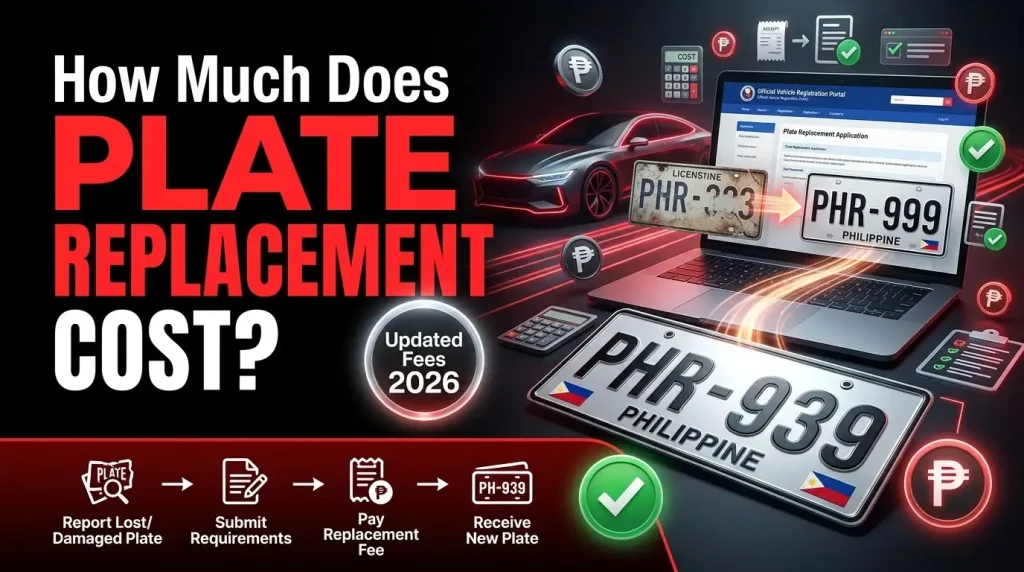
Motorcycle plate replacement costs ₱450 while car and larger vehicle plates cost ₱600. Additional expenses include the affidavit of loss (₱100-₱200), police report processing (usually free), and home delivery fees (₱150-₱600) if you choose that option.
The base replacement fee depends on vehicle classification. Motorcycles and tricycles pay ₱450 for both front and rear plates. Cars, SUVs, and vans pay ₱600 for their plate set.
That fee covers manufacturing and administrative costs. The LTO uses special reflective materials and embossing techniques that prevent counterfeiting. Each plate goes through quality checks before release.
Hidden costs add up quickly. The affidavit of loss varies by notary location. Notaries in malls and business districts charge ₱200 while those in smaller towns charge ₱100. Some notaries include documentary stamps in their fee while others charge separately.
Home delivery is optional but convenient! The LTO partners with courier services to deliver plates directly to your address. Delivery fees range from ₱150 for Metro Manila to ₱600 for remote provinces. This service saves you a return trip to the LTO office.
Always get an official receipt for every payment. Some LTO offices still have fixers who offer “faster processing” for extra fees. These are illegal and put your application at risk of cancellation.
How to Check Your LTO Plate Replacement Status
After applying for a replacement plate, many vehicle owners want to know when it will be ready for release. Fortunately, there are several ways to track the status of your replacement plate and stay informed about its progress.
Below are the most common methods you can use to check whether your replacement plate is already available for claiming.
Online Plate Inquiry through LTMS Portal
- Open your device’s browser and go to the official portal of lto
- Then login your account on the portal
- Then go to the “Motor Vehicle”
- Then click on the “Plate Inquiry”.
- After that provide your plate number or you can use your CR number instead of plate number.
- Then you will be able to see your plate status on your screen.
Visit the LTO Office
If you have any issue with your internet connection or portal access you can directly check it by lto office.
- You have to visit your nearest branch or Land Transportation Office with your CR or Official Receipt OR.
- Then ask the status of your plate number from the lto staff member.
- They will check your plate status and inform you whether it’s still under process or already available for release.
Use Official Tracker
- Go to the plate tracking tool.
- Enter your 15-digit MV file number or plate number.
- The system shows real-time status including “In Process,” “Available for Pickup,” “Ready for Delivery,” or “Dispatched” depending on your application progress.
Follow LTO Updates for Plate Availability
The LTO shares updates about released license plates through its official website and social media pages. These updates may include lists of available plates, claiming schedules, and other important information for vehicle owners.
If you check these announcements regularly, it can help you know if your replacement plate is ready for pickup.
What Are the Different Types of Plate Replacements?
LTO offers four plate replacement types: lost plate replacement, stolen plate replacement, damaged plate replacement, and old plate upgrade. Each type requires specific documents and follows the same basic process but differs in initial requirements like police reports or damage verification.
Lost plate replacement: You apply for lost plate replacement when you cannot find your plates but suspect no theft. Maybe they fell off during travel or you misplaced them during vehicle maintenance. So, you need only an affidavit of loss without a police report.
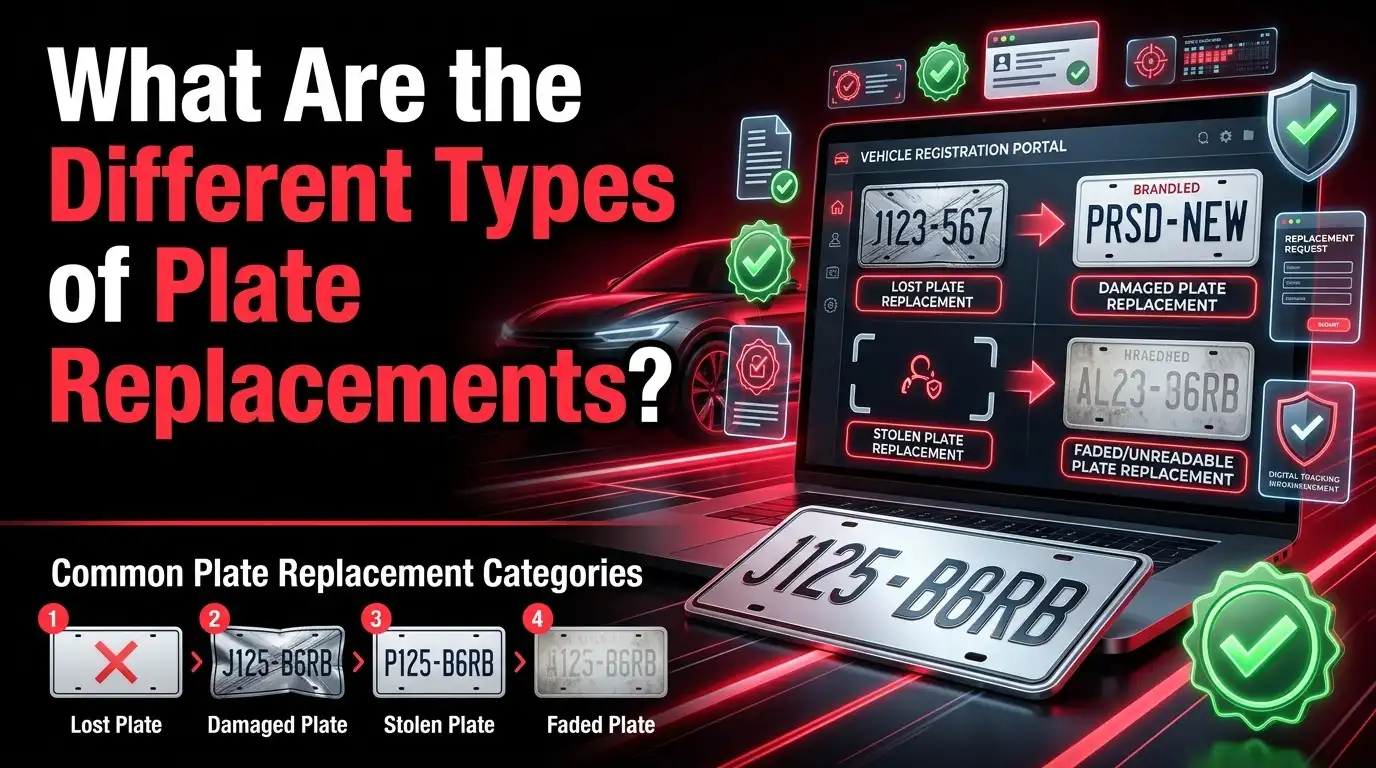
Stolen plate replacement: When you apply for a stolen plate you need extra documentation. File a police report immediately after discovering the theft. The report protects you if someone uses your plates illegally. The LTO flags your old plate number in their system to prevent misuse.
Damaged plate replacement: For applying the damaged plate replacement you must bring the damaged plates to the LTO office. An evaluator inspects the damage to confirm it meets replacement criteria. Rust, deep scratches, or bent metal that obscures numbers qualify as damage.
Old plate replacement: Old plate replacement happens during voluntary upgrades. The LTO occasionally offers programs for older plate designs. You can upload your plate number online first to check if you qualify for an upgrade program.
Can You Get Temporary Plates While Waiting for Replacement?
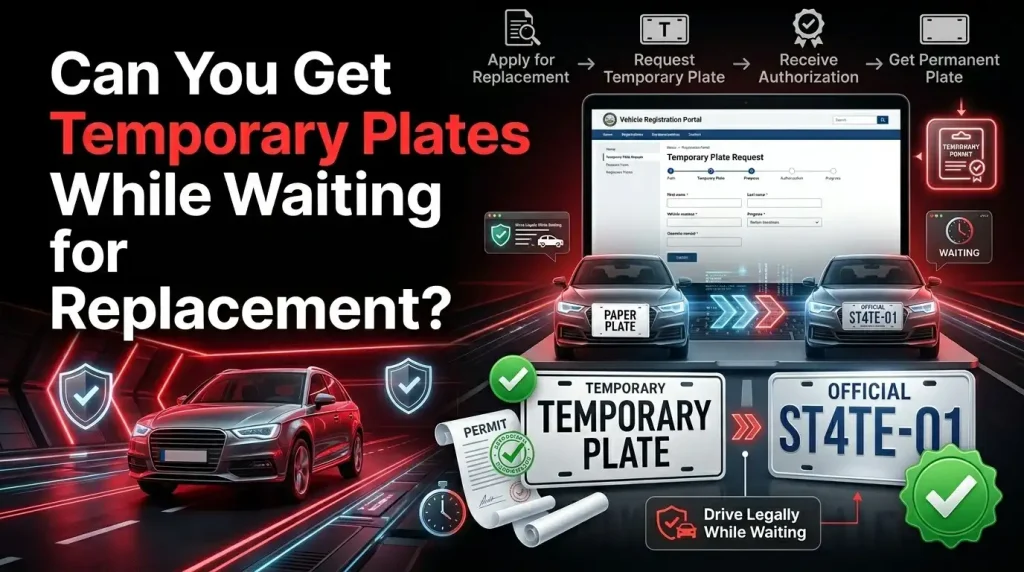
No, the LTO does not issue temporary plates for private vehicles during replacement processing. You must use your claim stub and OR/CR as temporary proof of registration when stopped by traffic enforcers while waiting for your new plates.
This surprises many vehicle owners. Unlike driver’s license replacements that provide temporary permits, plate replacements offer no physical temporary plates. You’re technically allowed to drive but must carry specific documents.
Always keep these documents in your vehicle. Your claim stub proves you filed for replacement. Your OR and CR show your registration remains valid. A photocopy of your police report (if applicable) explains why you lack plates.
Traffic enforcers understand this situation. When they stop you for no visible plates, calmly explain you’re waiting for replacement and show your documents. Most officers will verify your claim stub’s authenticity and let you go without citation.
That doesn’t mean you’re completely safe. Some enforcers may still issue warnings or advisories. They might require you to sign an acknowledgment promising to install plates immediately upon receipt. Avoid unnecessary trips during this period to minimize encounters.
Take photos of your documents with your smartphone. If you forget your physical papers, showing photos often helps during roadside checks. It’s not officially accepted but demonstrates good faith compliance.
What Happens If You Don’t Replace Lost or Stolen Plates?
Driving without plates results in ₱5,000 fine, vehicle impoundment, and confiscation of your OR/CR. Additionally, criminals may use your unreported stolen plates for illegal activities, making you liable for traffic violations and crimes you didn’t commit until you formally report them.
The penalties are severe and immediate. Traffic enforcers can apprehend your vehicle on sight for missing plates. They’ll impound your vehicle until you settle the fine and show proof of plate replacement application.
The impoundment fee adds another expense. Most LTO impounding facilities charge ₱100 to ₱300 daily storage fee. A week-long impoundment costs ₱700 to ₱2,100 on top of the original fine. Your vehicle stays impounded until you pay all fees.
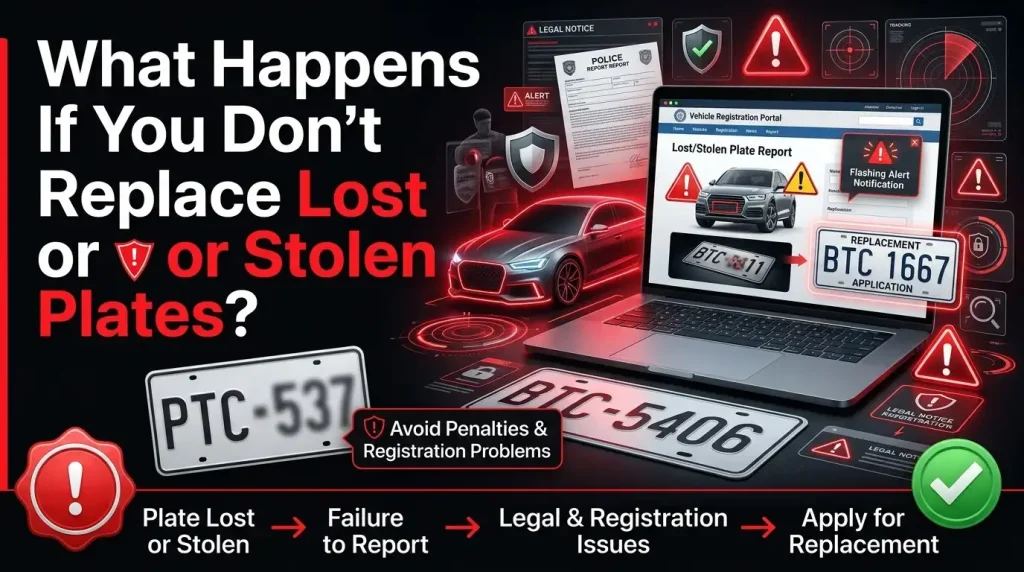
Unreported stolen plates create bigger problems. Criminals attach stolen plates to vehicles used in crimes. If someone uses your plates during a robbery or hit-and-run, police will trace it back to you. You’ll spend time and money proving you weren’t involved.
Insurance complications also arise. If you have comprehensive car insurance and don’t report stolen plates within their required timeframe (usually 24-48 hours), they may deny future claims. Read your policy’s reporting requirements carefully.
To avoid these issues, immediately check lto violation records periodically after reporting stolen plates. This helps you catch any fraudulent violations before they accumulate penalties.
How Long Does the Plate Replacement Process Take?
Standard plate replacement takes 4 to 8 weeks from application to receipt. Metro Manila applications average 4 to 6 weeks while provincial applications take 6 to 8 weeks due to transportation logistics and lower production priority.
Several factors affect processing time. The LTO manufactures plates in batches based on region and vehicle type. If your application coincides with a large batch order, processing speeds up. Off-peak seasons like January and February see faster turnaround.
Peak registration months slow everything down. March, April, and December are renewal seasons for many vehicle registrations. The LTO prioritizes renewal plates over replacements during these months because renewals have legal deadlines.
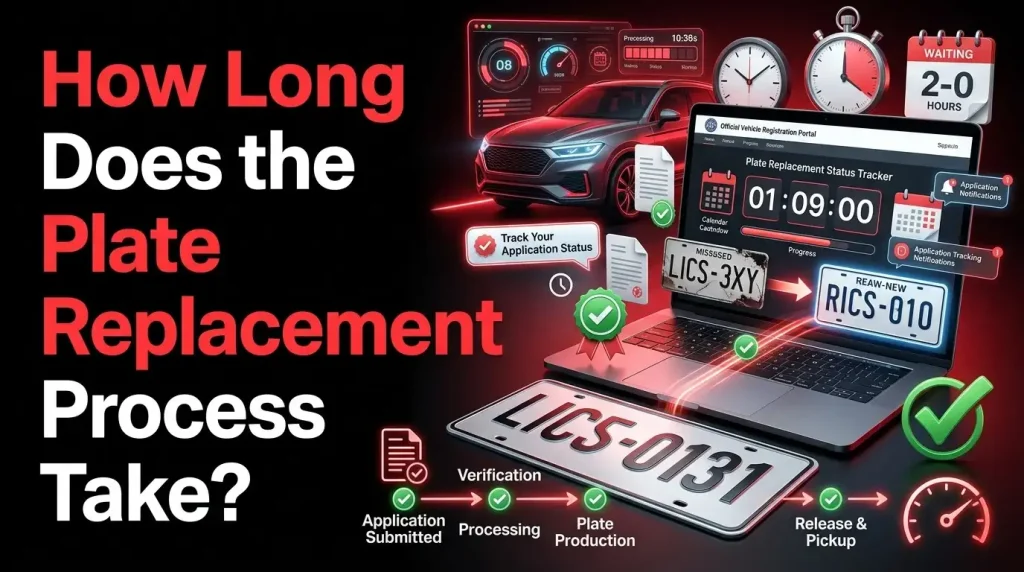
Location makes a significant difference. Applicants in Metro Manila receive plates faster because the main manufacturing facility operates nearby. Plates for Visayas and Mindanao regions require additional shipping time from the central facility.
Home delivery adds 3 to 10 days to the total timeline. The courier needs time to sort packages and plan delivery routes. Remote areas in provinces may wait longer due to limited courier coverage.
Timeline Breakdown by Stage
| Stage | Duration | What Happens |
|---|---|---|
| Application Verification | 1-2 days | LTO checks documents and processes payment |
| Queue for Manufacturing | 1-3 weeks | Application waits in production queue |
| Plate Manufacturing | 3-7 days | Physical plates are created and quality checked |
| Transport to Office | 3-14 days | Plates shipped to designated LTO office |
| Ready for Pickup/Delivery | Same day | Office notifies applicant via SMS |
What Should You Do After Receiving Your New Plates?
Immediately install your new plates using proper screws and bolts, then visit an lto accredited medical clinic if your registration expires soon to complete renewal requirements. Verify the plate numbers match your OR/CR exactly before leaving the LTO office or accepting delivery.
Check your plates carefully before leaving. Compare the embossed numbers with your OR and CR documents. Any discrepancy means the plates belong to another vehicle. Report mismatched plates immediately to prevent legal complications.
Installation matters more than you think. Use proper mounting hardware that won’t rust or break. Position plates level and centered on your vehicle’s bumper. The LTO requires plates to be clearly visible from 15 meters away in daylight.
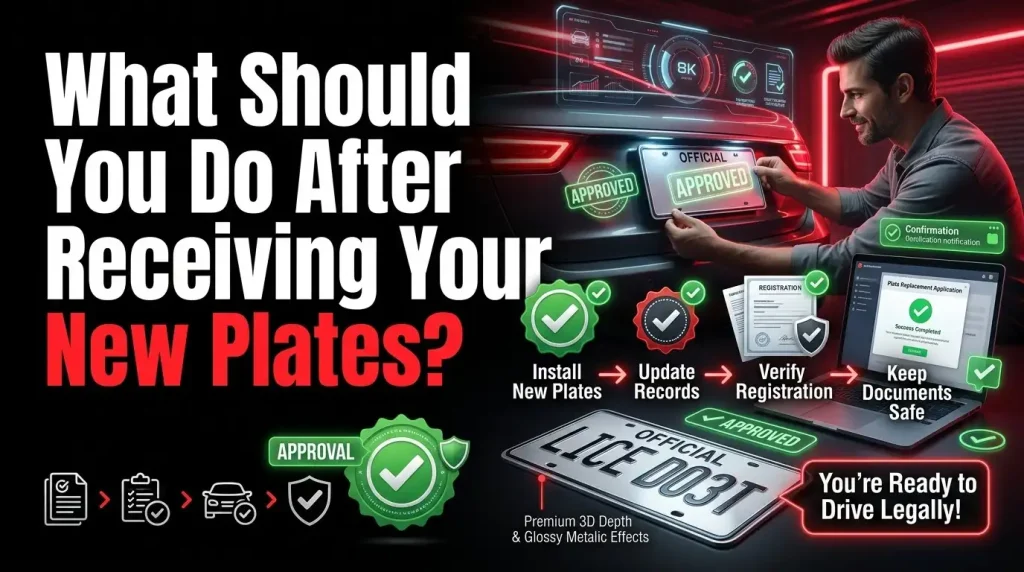
Front and rear placement follows specific rules. Cars must display the front plate on the center of the front bumper. The rear plate goes on the rear bumper or designated area. Motorcycles mount the rear plate on the rear fender with a clear view.
Never cover or modify your plates. Tinted plate covers, decorative frames that obscure numbers, and unauthorized stickers violate regulations. Traffic enforcers can cite you for obstruction even if the numbers remain partially visible.
Keep your claim stub even after receiving plates. This document proves you followed proper replacement procedures. If anyone questions your plate legitimacy later, the stub provides evidence of legal acquisition.
Consider reviewing the lto alarm guide to understand your vehicle’s alarm requirements. Some plate replacements trigger alarm system updates, especially for newer security-integrated vehicles.
Common Problems During Plate Replacement and Solutions
The most common problems include lost claim stubs, delayed manufacturing, incorrect plate numbers, and unavailable pickup notices. Each problem has a specific solution through proper LTO channels, though resolution may require patience and multiple office visits.
Lost claim stubs are surprisingly common. People misplace the small paper during the long wait period. If you lose yours, visit the LTO office where you applied with your OR/CR and valid ID. Request a claim stub reprint from the customer service desk.
The reprint process takes 30 minutes to 2 hours depending on office traffic. The staff verifies your identity and searches their records using your vehicle details. Some offices charge a ₱50 administrative fee for reprints while others provide it free.
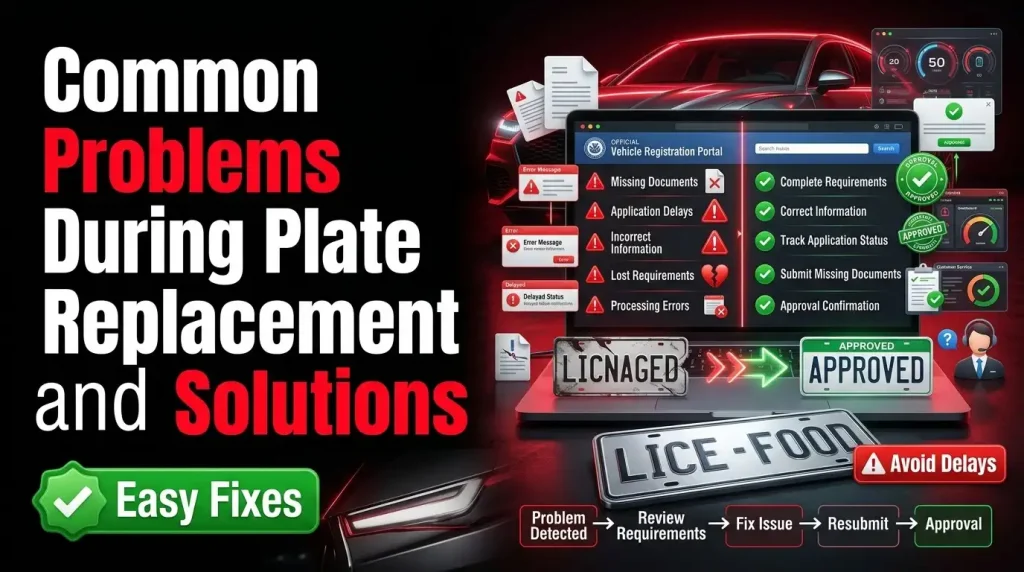
Delayed manufacturing frustrates many applicants. When your tracker shows “In Process” beyond 6 weeks, visit your LTO office personally. Bring your claim stub and ask the releasing section to verify your application status in their internal system.
Sometimes applications get stuck in the queue due to system errors. The staff can manually escalate your request to the manufacturing facility. This doesn’t guarantee immediate production but ensures your application doesn’t remain forgotten.
Incorrect plate numbers are serious issues. If you receive plates with wrong numbers, refuse acceptance immediately. Document the error with photos and return to the LTO office that day if possible. The office must file a correction request and restart your manufacturing process.
Dealing with No SMS Notification
Many applicants never receive the SMS notification when plates are ready. The LTO’s notification system has gaps. Mobile number changes, network issues, or database errors cause missed notifications.
Check your tracker regularly instead of waiting for SMS. Log in every 3 to 4 days during the expected timeframe. When status changes to “Available for Pickup” or “Ready for Delivery,” proceed immediately regardless of SMS receipt.
You can also call the LTO hotline at 1-3682 (1-DMTC) for status updates. The service operates Monday to Friday from 8 AM to 5 PM. Prepare your MV file number before calling to speed up the inquiry process.
Can You Transfer Your Plates to a New Vehicle?
No, LTO plates are permanently assigned to specific vehicles through their chassis and engine numbers. When you sell your vehicle, the plates stay with it. The new owner must apply for new plates through the transfer of ownership process. Attempting to transfer plates to another vehicle is illegal and results in penalties.
This policy prevents plate swapping fraud. In the past, criminals would move plates between vehicles to hide stolen cars or evade traffic violations. The current system links plates directly to vehicle identification numbers in the LTO database.
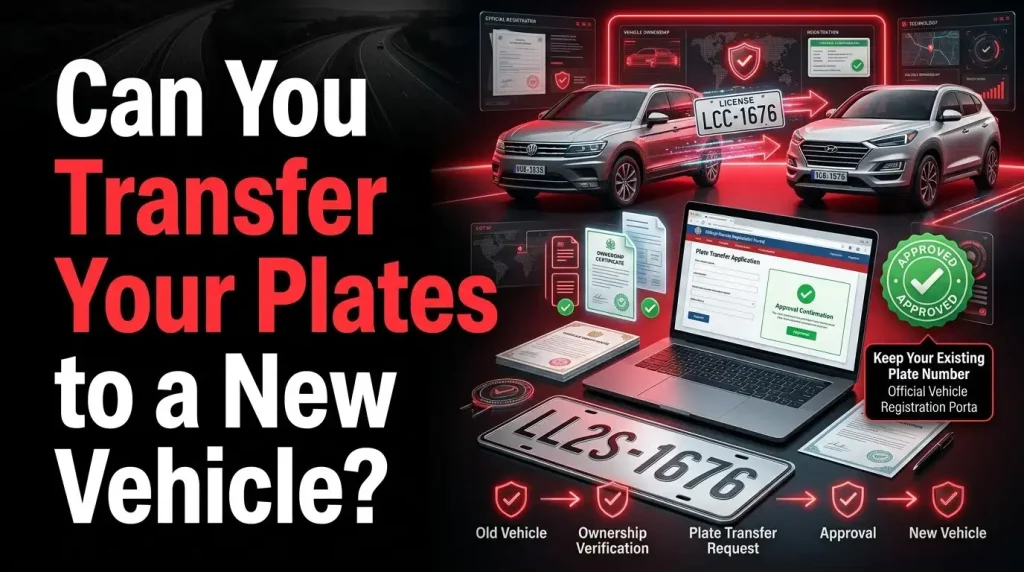
Your plates become worthless when you sell your vehicle. The buyer receives them with the vehicle but must replace them under their name. This ensures proper ownership tracking and prevents liability issues for previous owners.
Some sellers try to keep their plates for sentimental reasons. Vintage plate numbers or special combinations hold personal value. The LTO doesn’t allow plate retention but you can photograph your plates for memories before surrendering them.
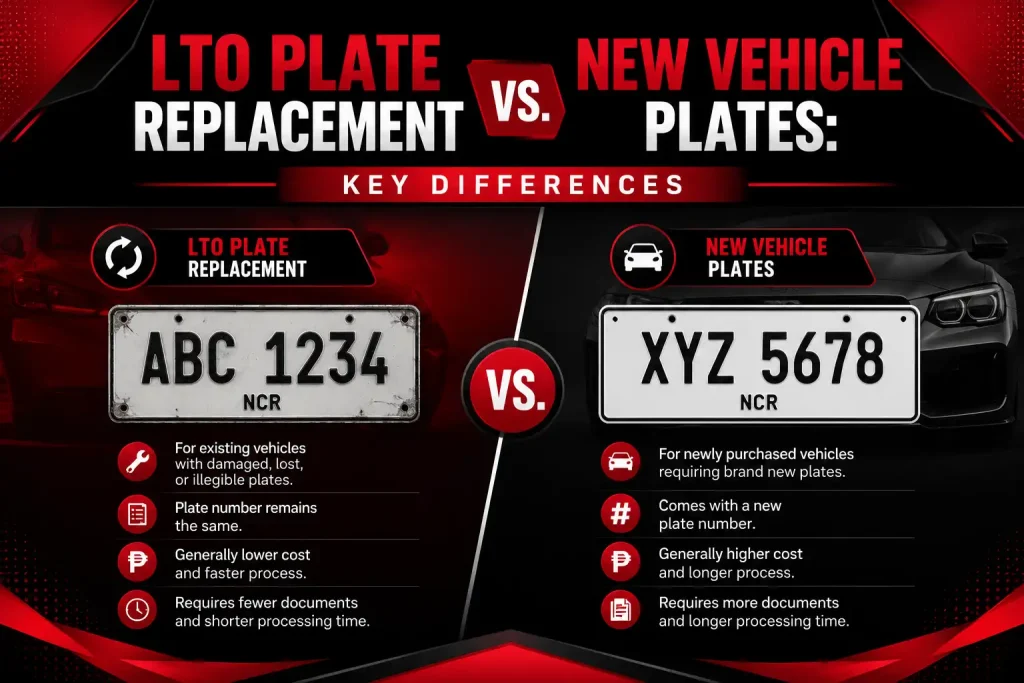
LTO Plate Replacement vs. New Vehicle Plates: Key Differences
Replacement plates cost ₱450-₱600 and take 4-8 weeks because they must match existing registration records. New vehicle plates cost the same but are included in the initial registration fee and take 3-6 months because new registrations enter a different processing queue with additional verification steps.
New vehicle plates involve more paperwork. First-time registration requires emission test results, insurance policies, deed of sale, and tax payment proof. Replacement plates only need proof of existing registration and explanation of why you need replacement.
The manufacturing process differs slightly. New plates get assigned completely new numbers from available sequences. Replacement plates must exactly duplicate your existing number, requiring careful verification to prevent errors.
Priority levels also vary. The LTO treats renewals and replacements with higher priority than new registrations because existing vehicles are already on the road. New vehicles can wait longer since they’re not yet operational.
| Aspect | Plate Replacement | New Vehicle Plates |
|---|---|---|
| Processing Time | 4-8 weeks | 3-6 months |
| Base Cost | ₱450-₱600 | Included in registration (₱3,000-₱5,000 total) |
| Documents Required | OR/CR, ID, affidavit | Deed of sale, emission test, insurance, tax receipt |
| Plate Number | Same as original | New assignment |
| Temporary Proof | Claim stub + OR/CR | Temporary plate sticker |
Tips for Fast Replacement Processing
Apply early in the week during off-peak months (January-February), ensure all documents are complete with clear photocopies, choose less crowded LTO extension offices over main branches, and opt for home delivery to skip the pickup wait time.
Timing your application makes a real difference. Visit LTO offices on Tuesday or Wednesday mornings. Mondays are crowded with weekend backlog while Fridays have people rushing before the weekend. Mid-week mornings from 8 to 10 AM offer the shortest queues.
Document preparation saves hours. Make two photocopies of every required document before going. Some LTO offices have photocopy services but they’re overpriced and slow. Arriving with ready copies means faster verification.
Choose your LTO office strategically. Main district offices process more applications but have longer lines. Extension offices in smaller municipalities handle fewer people and often provide personalized service. Your plates will arrive at whichever office you choose anyway.
Home delivery eliminates one entire visit. You pay extra for convenience but save transportation costs and time for the pickup trip. If you live far from your LTO office, delivery often costs less than multiple trips back to check availability.
Follow up politely but persistently. If your tracker shows “In Process” beyond the average timeline for your region, make a courteous inquiry at your LTO office. Sometimes a gentle reminder moves your application forward in the queue.
Screenshot your tracker status every week. If problems arise, having a dated history of status changes helps when filing complaints or following up with LTO staff about delays.
How to Avoid LTO Plate Replacement Scams
Only transact at official LTO offices, never pay fixers or agents who promise faster processing, get official receipts for all payments, avoid online sellers offering “ready-made” plates, and verify plate authenticity using the embossed serial numbers and security features.
Fixers remain a persistent problem at LTO offices. They approach applicants in parking lots or waiting areas, offering expedited processing for extra fees. These fixers have no real authority and may disappear with your money.
The LTO has official processing times that cannot be shortened through informal channels. Anyone claiming they can “rush” your plates through connections is lying. The manufacturing facility follows strict queues that nobody can manipulate.
Online plate sellers operate illegal businesses. Some social media accounts advertise ready-made plates that match your vehicle. These plates are counterfeit and using them carries the same penalties as driving without plates. Always get plates directly from LTO or their official courier.
Verify plate authenticity before installation. Genuine LTO plates have specific security features including embossed numbers, reflective coating, and unique serial numbers. The material feels rigid and the numbers should be raised, not printed.
Check the plate’s edges for quality. Official plates have clean-cut edges without rough burrs or uneven surfaces. The coating should be uniform without patches or discoloration. Counterfeit plates often show poor manufacturing quality in these details.